
Speak, Dance: May Zarhy
On talking while choreographing, audience reactions, and dance during wartime

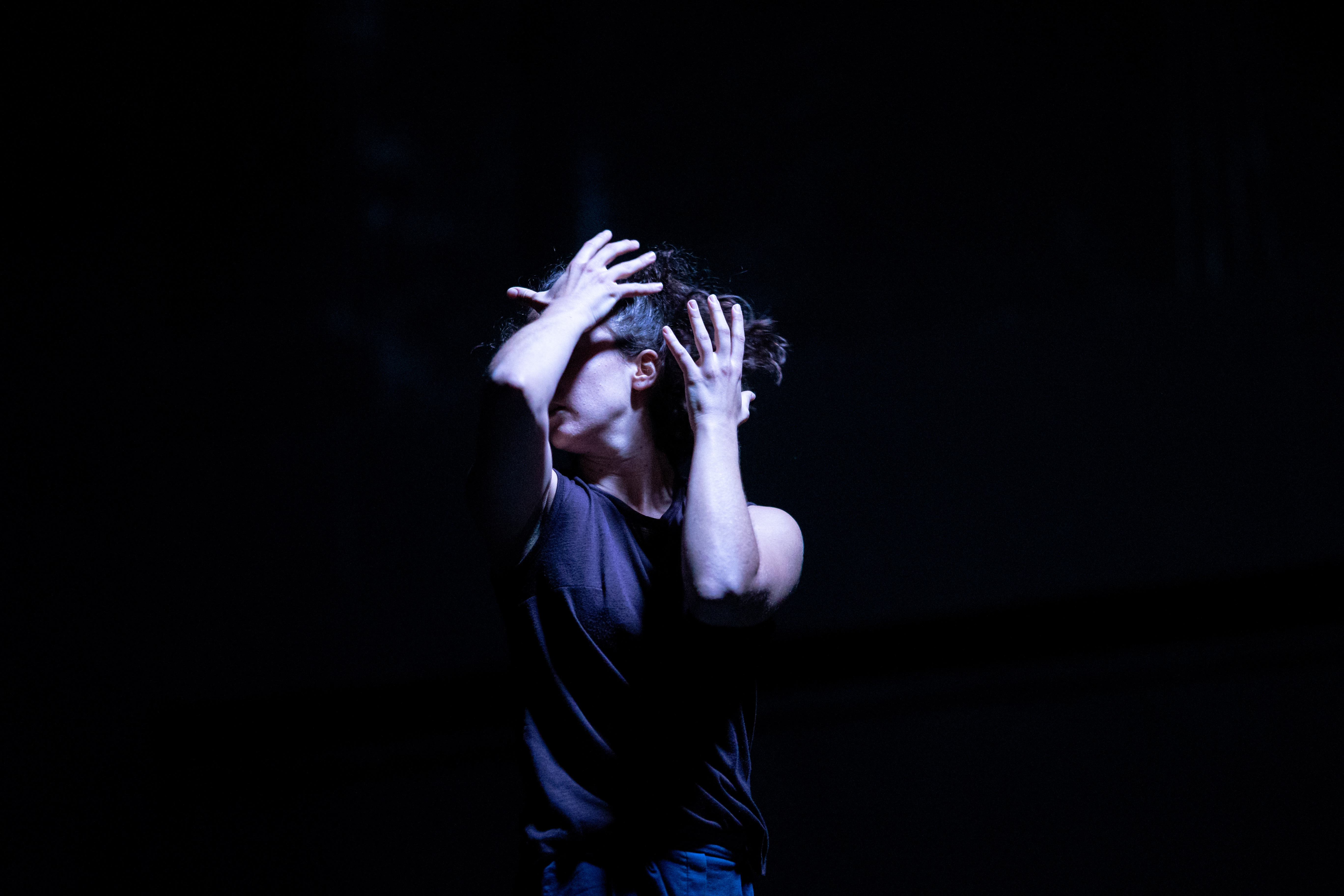
On the morning of December 4, 2025, the performance of Kristin at International Exposure at Suzanne Dellal Centre in Tel Aviv started with words. They were spoken by Kristin’s choreographer May Zarhy. She explained to us that Kristin is usually followed by a conversation with the artists and ends with the same dance performed a second time.
But that morning, we were to only see the solo once without the conversation or the second performance. The reason, as Zarhy explained to me later during our interview over Zoom, was that the programmer thought the festival participants already had so many shows to go see for the rest of the day that it would be better to keep Kristin shorter.
I thought the conversation would have slowed the day down a bit, allowing for time to reflect and for people to talk to one another, instead of moving from one show to another the whole day. And it’s always a privilege to get to see a performance again—to be more fully settled in, to be more ready to be transported, to be more focused, to have another opportunity to pick up new details.
With Kristin, Zarhy gives the audience an opportunity to ask questions, listen, and see again—to essentially be an audience and a critic at the same time.
Funnily enough, this performance-conversation-performance format comes from an artistic gathering that wanted to control attendance and keep out the critics. In 1918, Austrian composer Arnold Schönberg founded Society for Private Musical Performances (Verein für Musikalische Privataufführung) in Vienna. From 1918 to 1921, the society held over 100 concerts of over 250 compositions by established and new composers.
The purpose of the society was for musicians and music lovers to attain clarity and comprehension of each composer’s objectives and intentions for each piece. For the musicians, this was to be achieved through intense rehearsals. And for the audience, it was to be achieved through repetition of the performance of the same composition, sometimes many times over the course of a session. Only paid members of the society were permitted to attend these private performances. Critics were explicitly banned. Also banned were audience reactions, whether positive or negative. So was advertising of any kind. Schönberg wanted to inform musicians and music lovers in an environment free from audiences and critics who were hostile to new music.
This repeat-viewing format was then adapted by visual artists Ruth Anderwald and Leonhard Grond for their film screening series called Hasenherz or the Pleasures of the Moving Image and Word. A film is screened, discussed, and screened again.
Schönberg’s society, Hasenherz, and Kristin share at least one similar goal: better understanding of the works being presented. But while Schönberg seemed obsessive, overly protective, and even dictatorial, the contemporary variations of his method seem the opposite: relaxed, accessible, and even vulnerable. Despite the same method, Schönberg’s attitude toward the audience and approach in bridging the public to difficult new works were completely different to Hasenherz’s and Zarhy’s.
Zarhy sent me a recording of Kristin, in which the entire format was realized for the first time. The performance was in Berlin in December 2024 and the conversation in English. Unlike in Tel Aviv a year later, the show began not with Zarhy, but with dancer Amit Zaretsky performing a solo of around 20 minutes. Zarhy then entered the space to introduce the work before opening the floor up to audience’s questions and comments. Amit was also present at the conversation, but off-camera and could be heard responding to some of the questions.
I saw the video twice: first time before I interviewed Zarhy in January and second time after she had sent me a recording of her new piece, On the Threshold, in April.
The solo itself didn’t touch me the first time I saw it live in Tel Aviv. I struggled to focus as it was the first performance of the day. I saw the solo again in the video about a month later. Once again, it didn’t have much of an effect on me. It was only after listening to the conversation that I began to be taken by it, by the music and the fluidity of Zaretsky’s movement. I was struck by how different it felt watching it the second time immediately after listening to the conversation, even though I wasn’t physically present in the theater.
When I watched the video of Kristin again a few months later, it was right after I had watched the recording of On the Threshold. The show moved me tremendously and helped me gain a deeper understanding of May as an artist.
This time, in watching Kristin, I also wanted to pay closer attention and take notes. Once in that headspace, I became more aware of the sounds that preceded the lights and the dance.
The dance started in darkness and metallic sounds, like a long and heavy chain dropping on itself. The music, by Swedish-Israeli artist Daniella Ljungsberg, began to play. The atmosphere was mysterious. Then a dancing figure slowly emerged. Was she lost? Confused? The metallic sound continued, clink-clanking and crashing. Or was it the sound of glass being smashed to pieces?
The dancer’s movements were like pantomime of sorts. She seemed to be touching invisible objects, pushing things that we couldn’t see, going underneath structures only she saw, carving out a space for us to imagine. Silence. Then the music shifted. The dance became more fluid, more expansive, as if she was dancing in an empty space now. But then the movements began to suggest not objects in the space, but another person in the space. Was she holding someone?
I took careful notes of the conversation. And then the solo began again. This time, I noticed that what I had mistook for silence was actually soft whispering, the sound that gave the dance its name. Zarhy had talked about the story behind the piece’s title during the Q & A with the audience: Kristin Oppenheim’s recording of her own whispering from the 90s. “It was such a nice friend to have [...] because it has something very intimate, very female, very vulnerable, but at the same time powerful.”
Zaretsky’s performance after the conversation became emotionally clearer to me. I noticed the level changes, the tiptoeing, the dancer closing her eyes, covering her head and face—details that gave more clues as to what she felt in the space she was inhabiting. I jotted down the following: “It has made me more present. The convo—words, interaction—has grounded me more firmly in the space.”
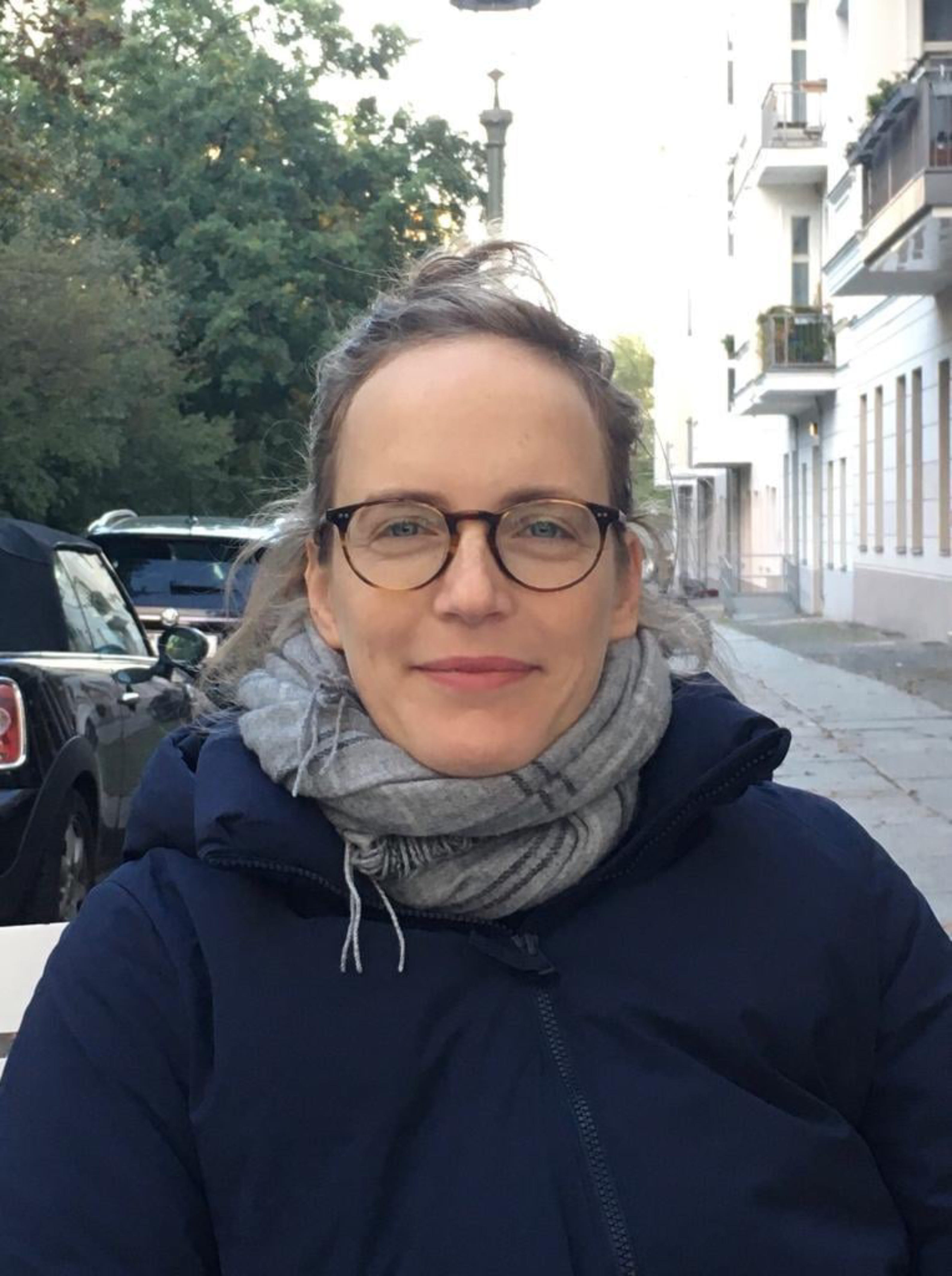
Zarhy is both a dancer and choreographer. But in both Kristin and On the Threshold, she places herself in her creations as a choreographer in a vulnerable rather than dominant, egocentric, or possessive way. She doesn’t assert her ownership of the piece with her presence. In Kristin, she’s there in between two performances, not in the dance itself, positioning herself more as a mediator between the performer/performance and the audience.
In On the Threshold, she is there again as the choreographer, not in-between performances, but as part of the performance, which makes her another performer. Like in Kristin, she introduces, explains, and contextualizes her work for the audience.
Similar to what Schönberg did with his Society of Private Musical Performances, Zarhy is, in her own way, protecting her work by informing the public and clarifying her work for them. But unlike Schönberg, she doesn’t try to over-control the public. Instead, she opens herself up to questions and comments, standing in between the public that could be hostile, and her work, gently asserting ownership of her own creation—protective but not possessive, generous with information and open to interpretations rather than obsessive about clarity and being understood.
The interview below took place over Zoom and emails. Zarhy lives and works in both Germany and Israel. Her dance career, in fact, began in Germany. But things have been very different for her since the October 7 massacre and the subsequent wars.
When we touched on this subject during the interview in January, she told me how precious it was to do Kristin with a conversation in between. “It feels people are longing for intimate, sensitive, and complex encounters both in the form of performances and in class and workshops,” she said.1
In the interviews, we returned to some of her past works to discuss her relationship with the audience and how it has evolved. Zarhy also talked about how she works with language as a choreographer, how dance is treated in times of war, and why she continues to “insist on the single human scale”.
The interview has been condensed and edited.
Why did you choose this particular format of solo-conversation-solo just for “Kristin”?
Kristin is a solo that’s all about relationship or relativity: her movement is always in relation to something. And the creation process, although it’s a solo, it’s always been the two of us. The process included many discussions, a lot of trying things out together, then separating, and Amit doing it on her own. The whole practice that led to the work consisted of long sessions of guided improvisations, where I guided both of us, working through the sense of touch: through contact with the floor, the wall, between us two, and contact with the air.
So there was something about relation that was very present in the work that I felt would be great to expand into the way that it would be presented as well—the fact of having a conversation with the audience and having a relationship with them that then goes back to watching the piece once again. So the internal relationship of the process expands into the relationship with the audience.
I work a lot with language, with guiding movements through specific wording and images. So the relationship between what words are present in the studio and what is eventually manifested in the body and movement material is essential in my practice. I wanted to have this principle come across also in the format of the performance. Meaning, to have language as part of the performance, to share with the audience how we work, the context in which it was created, and to allow them also to ask questions, etc. But not to finish the evening with words, [instead] to see how these words affect one’s way of watching and perceiving and experiencing.
You said in the video during the post-show talk [of “Kristin”], that you like the post-show talk format, but usually it doesn’t end with the show. It ends with words. So when you do it in this format, does that make the post-show talk feel different? And what did you feel about showing it again the second time?
It’s interesting because the video that I sent you was the first time ever that we tried it, so I was also quite nervous, and I had no idea how the format would work for [the audience]. So I was allowing people to leave. I said, “If it’s too much for you to see it the second time, just go. It’s fine. I won’t be offended.”
But then I realized it’s very interesting what this talk does to the whole energy in the room and the atmosphere. And the way Amit entered the second time, you really sensed in the air the different concentration from the audience together with Amit— the level of sensibility that they had in the second part was so much more nuanced, that they were able to perceive things on a very different level.
In the beginning, I told [Amit], “Are you willing to do it?” And she was very excited to try it. And after the first time, she said that the second time is actually the ideal condition for dancing. You feel the audience is with you. They devote their time in a very specific way. And they’re really interested, curious, and processing. So her entrance the second time always feels, to me, much more elaborated. She’s less stressed about pulling the audience into being interested or into proving something. I always feel like, in any piece, the first few minutes are for pulling in the audience and giving them the security that we know what we’re doing: Don’t worry. Trust us to go through this journey. In a way, the second time she does it, it’s totally there. The trust is there, the curiosity.
Is there a specific way you choose dancers to work with? You’ve worked with Amit a few times. How did that relationship evolve?
With Amit, she took a few classes and workshops with me and felt very connected to my approach. So there was a clear interest from her side. And that’s always a big plus for me. I don’t do auditions, or I haven’t done it up until now. I don’t like the situation, the stress, and the dancers having to prove themselves. I normally meet dancers when I teach. With a previous dancer, [it was] when I was doing dramaturgy on another production, and he was dancing in it. I like to see how a person actually works in the studio. And it’s important to me that this person is interested in what I do. I don’t want to be in a situation where I have to convince [the dancer] that what I do is interesting. Also, my work is very much based on research. It consists of long sessions of moving and paying attention to what you pay attention to. It’s a concentrated research around the relationship between moving, sensing, thinking, perceiving, based on somatic practices of experiential anatomy. And I think people have to be interested in such work (and not do it because they have to). It’s not about execution as such. It’s about being involved in the process in a very dedicated way.
You said earlier that you use language to guide a lot. Is that not common [in dance]? Is language not something that’s usually there in dance, even in the choreographic process?
Yeah, you’re right. I think it’s always there. It’s more the decision to make it very present in the format itself. During one of these conversations in Kristin in Tel Aviv, the audience were so surprised to hear that, during rehearsals of dance pieces in the contemporary dance field nowadays, there are many conversations happening as an integral part of the process. They were surprised to hear that there was a lot of language involved.
But I would say that the specific use of language in my work is that most of the time, I don’t show things. I use the guidance of language, so that the person will interpret it for themself. So it’s a more Feldenkreis-inspired approach where the process and the image that comes out [depends on] how you interpret [words] within your body. And it doesn’t involve copying. I think that’s specific to how I use language and that I play a lot with words and their phonetics. I’m usually doing things when I talk, but it’s not about having to copy me. Also, in the classes that I give, the participants have to mostly listen, it’s not about copying forms. It’s about getting a sense of a quality or an imagery or inspiration and finding for themselves their interest within it.
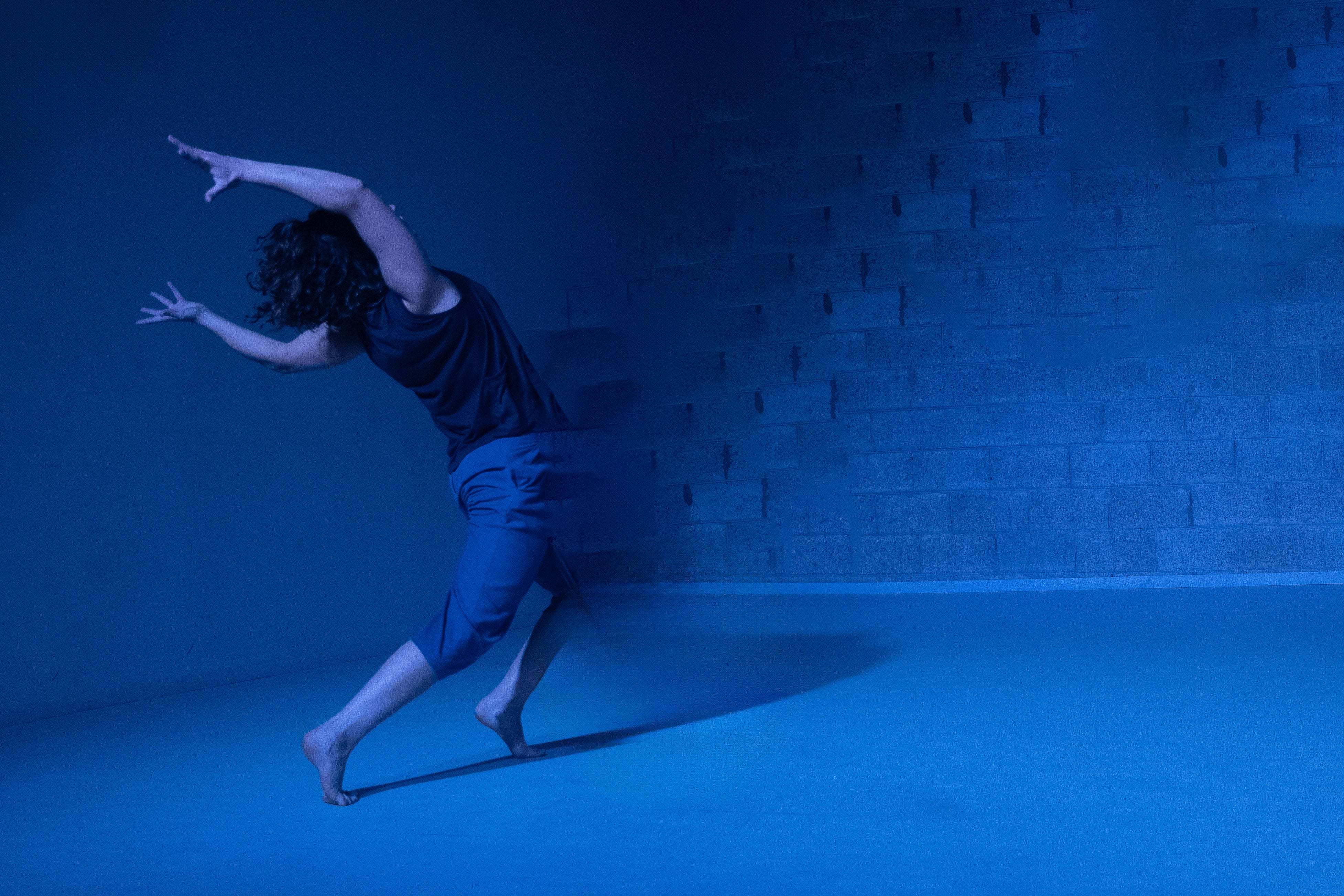
There are a few pieces in which you use only text to guide the audience, [like in “Y”]. How much does writing figure in your process in general?
On the Threshold […] is the first time that I [worked with text] since Y. And I think it came also from what happened with the format of presenting Kristin and the feeling of the presence of words. Not that it’s important to have words, but it connected me to the interest that I have, in my practice, to learn, and seeing the situation of performance as a learning situation. We learn together. It’s not that I teach something that I know already. But I set up the conditions for a possible learning around certain terms and areas of interest.
Regarding writing, I realized that in the past when smart phones didn’t exist, I wrote regularly. I used to write thoughts, short texts etc. Now it’s less present as an ongoing thing, but I always write within a creative process and teaching contexts, it’s important for me to hold the things that happen in the studio within language, and I keep many notebooks for different reasons. There’s always a place for giving shape to things by language. Whether it’s always present in the work or not [is another matter].
I’m interested in your piece “1325” in 2014. You said that was the turning-point piece because it was such a brutal or harsh experience when a lot of the audience members walked out, although some remained. Did that piece also change the way you think about audience relationship to your work or to the way you choreograph for the audience?
Very interesting. I think it was really a long process for me because I think I was very hurt by this event.
What kind of space was it in?
It was a black box. Many people stayed and appreciated the work, but I stayed with the experience of all the people who left. The relationship with the person that invited me was quite brutal because they were not holding the situation together, not supporting me. I was given notes of what to change after one show in Paris as a sort of a condition for presenting again. And in Berlin, there was no real holding of the situation or discussing it in any way. It was hard because I believe a presenter has to stand behind their decision to invite an artist. Different reactions can arise toward a piece, and I think the presenter should be looking for a way to engage and support the artist even if it’s hard or harsh. I went through a process with it. It was painful, and I felt misunderstood because I didn’t understand why people were pissed off. The work itself didn’t mean to piss off anyone. It wasn’t provocative in the way I conceived the material. So it did make me realize my responsibility to contextualize the work for the people to be able to hopefully get it as close as possible to what I mean, and to realize that material has its own life, and you cannot control it fully either. So there were big realizations.
And the other realization was that, from then on, I worked hard on figuring out my way of composing the relationship between what is set and what is open. I wouldn’t say “improvise” because I always work with principles for movement, timing, space. So these create a framework. I don’t see it as improvisation. But from then on, I’ve been developing my way of how a piece can be written but still have openness and flexibility within that make it feel vivid. 1325 was very risky in the sense of freedom that I allowed within the piece, both for me and the other performer. It was too loose in a certain sense.
1325 premiered in Frankfurt. It went well there. But Frankfurt was my hometown back then, so the audience was also familiar with me to a certain extent. And then it traveled to Paris, and there the reaction was ambivalent. And then it was in Berlin in 2014. We had two shows that were very problematic.
Was it the length that people were mad about? When did they start leaving?
It was one-hour-long. I kind of repressed the whole event. I think people start leaving after around 20 minutes. It was a section where one performer would decide spontaneously which music to put, while the other one had to embody the music and let it live through their movement. It was quite a loose part in terms of the control we had over what would happen each time. The other moment where people left or felt to be provocative, was [when we played] Miley Cyrus’s “Wrecking Ball”. We were looping the song and were dancing to it, while trying to sing along to it. In a way, what was conveyed, for me, was the admiration of this ideal woman—the skinny, female pop star—and how two women were trying to live up to this ideal: putting on different costumes and wigs, trying to figure out what kind of woman they were, what they could be, what they hoped to be, while being very disconnected from themselves. The song was looped again and again, and our performance became more and more extreme, or, to use a charged word, hysterical. Eventually leading to reminiscences of “Wrecking Ball” left in our voices and bodies, presenting broken and longing women. This scene and the piece as a whole had to do with the female image and how it affected our imagination and expectation from ourselves. At this point, many people left; they were annoyed.
It’s interesting because, years later, I met a guy at a festival in Paris and he looked at me and said to me, “Hey, Miley.” And I was like, “What?” He had seen the piece nine years before in Paris, and it had stuck with him. So it was a good realization that part of the responsibility as an artist is also to accept the reactions and to learn how to deal with them. For him, the piece was strong and effective.
Does that mean, when you do something like “Kristin” now with post-show talk, you feel more vulnerable? Does that make you more nervous about doing something a lot more intimate with the audience?
No, I think I’m at another point in my career and also my personal growth, so I feel like I can handle it. I can totally have a different sensation from the outside as the choreographer, but also sensing the audience and how they perceive the work. I think the vulnerability of 1325 had a lot to do with me performing myself.
Because you kind of question the borders and definition of dance. In the piece Pausing in 2012, you said, “This piece flows between dance and movement.” And in your About page, you write that you “move between functional and daily movements and the ones we could call dance”. Since you work so much with language, for you, is there a limit to the words “dance” and “movement”? Where do you draw the line? Is it as simple as “If I call it ‘dance’, and I’m the choreographer, everyone should accept it”? How do you define these two terms?
I’m fascinated by when you as a mover feel like you’re dancing. I’m interested in the experience of moving and the experience of dancing from the eyes of the one who does it. I’m not judging, “This is movement; this is dance.” But I’m interested because I think dance has to do with the experience of dancing. I can say when I feel I’m dancing, and not just moving. It can be the exact same movement, but there is something different. It sounds esoteric, but I really sense when I’m taken into dance. I’m interested in the relationship between functional movement and dance. When do you call something “dance”? I’m also interested in people and their experiences and categorizations. I used to be pissed off when people said, “This is not dance.” But I’m curious about it now. What does it mean, “This is not dance”? To receive funding as a professional choreographer in Israel, it’s written that the dancers have to be professional dancers, for example. I find that less interesting. I’m touched by the transition from when movement becomes dance for the person that does it and for the person that watches it.
But you still work with people who call themselves dancers or have training in dance?
Yes. After 1325, I had a period where I was working with people who were not dancers. Between 2015 and 2018, I was working with a vocal artist, Michal Oppenheim, who had vast knowledge about her body, together with a few other singers. I also started teaching at that time groups that came from different backgrounds but not dance. I became curious about the amateur body and was working with that.
But since Ausencia, the first piece I did around absence in 2020, I shifted to working with highly trained dancers because something about the relationship between the dancer and the person is very interesting for me, and not obvious. I often feel that dancers, when they dance, they can quickly forget the person they are. Very easily, they’re instruments for doing virtuosic things that demand a lot of training. And they don’t necessarily bring their interest as people or their opinion. It comes across in their movements. That’s what I said about the daily and the dancerly because it’s important to me that you could look at the person, at Amit, for example, in Kristin and really just see her as a young woman in the world. But at the same time, at a certain moment, her movement shifts to being something that you say, “Wow! It’s beautiful! It’s amazing!” You know, the kind of admiration that you have for a dancer that does complicated things.
I was reading about your Covid work, and I thought you asked really interesting questions. And now for Israeli artists, it’s not just post-Covid, it’s now also post-October 7. Do you feel there’s a new phase for you as an artist, that there are post-Covid and post-October 7 [phases] of work?
Since Covid, we’re confronted, in Israel and worldwide, with catastrophes and great amounts of fear. Fear has been so present in life in the past few years. I can say that, to a certain degree, I also feel it when I’m in Berlin—the instability and budget cuts in the cultural field, the precarity as an artist, and the general shift of society into polarization and populist far-right positions, alongside the confusion and dizziness that the politicians deliberately create. It’s been six years since Covid, and these phenomena are omnipresent, and affecting the state of the body and mind of everybody. I am busy with the relationship between memory and movement and how we, through the repetition of movement, are confronted with things we did [in the past]. Through these past years and current reality, I see a constant confrontation with this relationship.
The relationship between memory and movement has to do with trauma also. This is something I sense very strongly in Israel since October 7. There are people who were affected directly and [suffered] losses. And there’s the great presence of the ongoing and vast losses in Gaza, the impotence that I feel as an Israeli who opposes what’s going on in Gaza, and the feeling that I have no power to change it. At the same time, there is a lot of trauma that has not been processed from generations before for all people in this region. My mother and her entire family were in the Holocaust. Many of them were murdered. Her family came from Poland to Israel. So for her, the things that are going on now are creating anxiety and fear, but they also [bring up] all the unprocessed stuff from her past in her body. And I’m related to it. There’s a clear feeling of unprocessed trauma here [...] And I’m dealing with it through my practice, as material, as qualities, but not in the narrative sense.
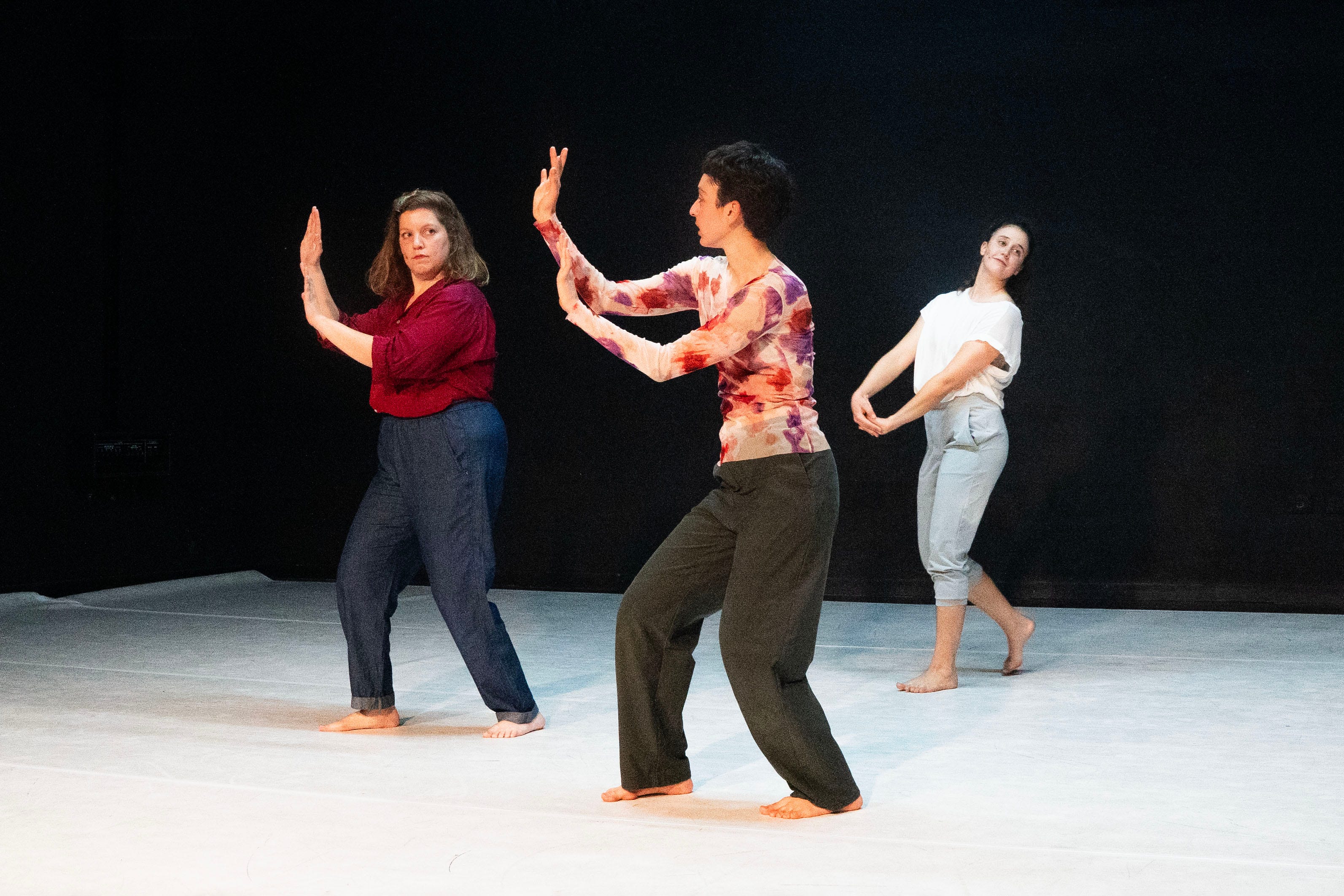
In “On the Threshold”, you talk about the 100% rejection rate, since October 7, of all your grant applications in Europe, the continent that was your other professional and artistic home for many years, and how you are now facing the reality that you have to be working only in Israel, for the Israeli audience, and in Hebrew. You also say that in 2007, after you graduated, you struggled to find justification for dancing and that you started writing down question after question in English because you were not in Israel but abroad. I noticed while watching “On the Threshold” that there weren’t any surtitles on the wall during the performance. All the performers speak in Hebrew. And at the end, you held signs that were written solely in Hebrew. It is as if you were certain that the entire audience was Hebrew-speaking, and only Hebrew-speaking. What does it feel like, and what does it mean to you, to be working in Hebrew and creating work in Israel and showing work to only Israelis in the current context? Did you even consider creating the piece in English as well?
What shaped the language of the piece was first and foremost its immediate context. While creating On the Threshold, I was responding very directly to the reality I found myself in: the complete rejection of my work across European funding structures since October 7, and the sense of being pushed back into a strictly local frame. At the same time, the piece deals with the urgencies of being an Israeli who opposes the current government and its actions, who is grieving the losses in both Gaza and Israel, and who is confronted with a profound sense of impotence in the face of it all. Hebrew, in that moment, was not a conceptual choice, but an almost inevitable one: it is the language in which these tensions are lived daily.
However, after premiering the work in Tel Aviv, I began to understand that while the piece emerges from a very specific local condition, it operates on a more meta level that resonates beyond it. As someone who is also based in Berlin, I am equally embedded in the European dance field and currently experiencing its increasing precarity, especially in light of ongoing cultural budget cuts and shifting political priorities. The feeling of being non-essential, of having one’s practice continuously questioned or deprioritized, is not unique to Israel right now. Questioning the relation between the studio practice and the social and political reality we live in, resonates all around me. It is something I hear from colleagues across Germany and Europe more broadly. In that sense, the work touches on a shared condition: the shrinking space for artistic practices within a climate that is becoming more conservative, more security-driven, and less willing to sustain complexity.
Because of this, I do see the work as deeply translatable, not only linguistically, but contextually. I would very much like to perform it in English and bring it into dialogue with non-Hebrew-speaking audiences. For me, the piece is ultimately about opening a space for conversation: about holding complexity without reducing it, about allowing vulnerability and contradiction to be visible, and about insisting on the relevance of dance and embodied practices precisely in times of social and political upheaval.
During the performances in Tel Aviv, when non-Hebrew speakers attended, we provided a printed translation of the text. But it is also true that since October 7, the audience has become almost entirely Hebrew-speaking, which reflects the broader isolation that the work itself is grappling with.
During the conversation session in “Kristin”, you said that you had been doing a series of solo pieces because you wanted to “insist on the single human scale” and that it’s precious to you at the time to insist on and explore that. “On the Threshold” features four performers, including yourself. But each person is performing as herself and presented as a distinct individual. We learn each performer’s name. And each performer speaks as herself, not a nameless member of a dance ensemble portraying a fictional character—a part of a mass or a crowd. But we also get to see the performers watching each other, dancing with each other, learning from each other: we get to see relationships form and develop over the course of the performance—solos becoming part of one dance, individuals becoming part of one ensemble. Are you still insisting on the single human scale in “On the Threshold” as in “Kristin”? Has what is precious to you changed or transformed in any way?
Thank you for this question. The insistence on the human scale remains central to my work, whether I am creating a solo or a piece with several performers, like On the Threshold. For me, it is less about the number of people on stage and more about the way each individual is approached and perceived. I am interested in a presence that remains personal and irreducible, where the performer appears in her wholeness as a human being, rather than as a function within a composition or as a representative of a role. In that sense, what you describe in On the Threshold is very accurate. Although there are four performers, each one stands as a distinct individual: we know their names, they speak as themselves, and their presence is not absorbed into an anonymous collective. This, for me, is precisely what insisting on the human scale means.
In this work, I am interested in what happens when distinct individuals share space: how they observe one another, learn from one another, influence one another, and momentarily come together without dissolving into sameness (even when they dance the exact same movements so to say). The ensemble becomes a field of relations rather than a unified body. Not a mass, not a crowd, but a gathering of differentiated presences.
What are some of the questions that you’re exploring at the moment in regards to dance and to your work?
The one big question I would say that led to the creation of my latest piece, On the Threshold, is the big question, is dance essential? Is dance essential to society? Is dance essential for us as human beings in this moment? Is movement essential? To which I feel the answer is yes. The big topic is to ask what is essential at the moment?
It’s back to the Covid question a little bit, right?
In Israel since October 7, every time there’s a big emergency, dance is again called, like during Covid, “non-essential profession”. No performances, no rehearsals. From one moment to another, you experience the collapse of what you think is important.
The other question is what is the practice of dance in relation to life? What is the relationship between the practice of dance in the studio and in the world?
The story has been amended to include this paragraph.