
Speak, Dance: Roy Assaf
On what to call a performance and what it means to have a studio of one's own

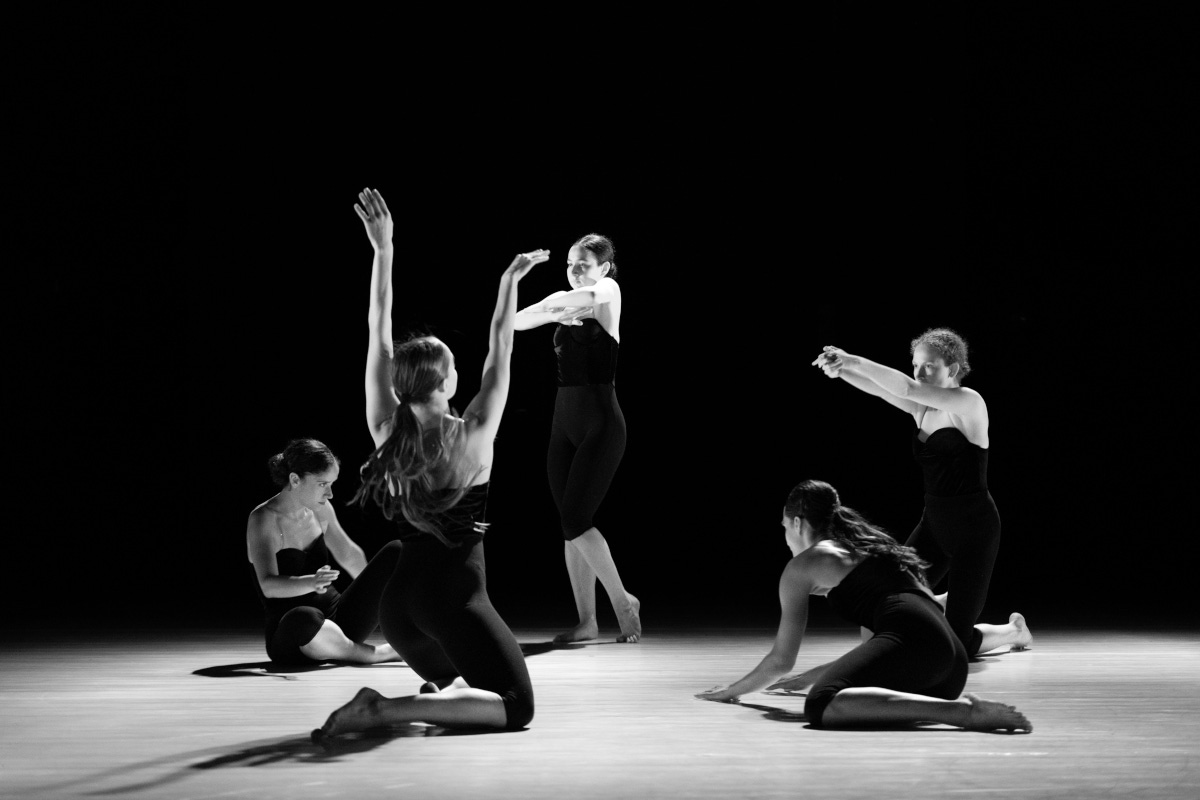
A young woman in a black camisole with transparent straps and black knee-length leggings stepped up to a microphone to announce in English that she would not be doing certain movements today because of a joint pain. The way she said it, succinct and wry, made us laugh. And that set the tone for the entirety of The Fall of a Structure by Roy Assaf Dance. The audience constantly erupted into laughter throughout the 60-minute performance.
The first dancer was then joined by four other dancers, all young women, all dressed in the same simple costume, all barefoot, all wearing their hair tied back in a tight bun. The stage was completely bare. It was simply these girls with their words and movements. But there was so much character and effervescence in this visual uniformity and spareness.
The comedy never came from their dancing. They weren’t performing physical comedy or funny choreography. It came from their words. They spoke of their relationships to their bodies and to dance. They to one another and to us. At one point, one of them asked for a volunteer to come up and read her diary filled with instructions. The audience roared with laughter as the volunteer went through the pages of the diary and read them out loud. Despite their apparent youth and verbal mischief, their dancing communicated unmistakable competence and seriousness.
The title, The Fall of a Structure, has always puzzled me. The show was so accessible and entertaining, so funny and affecting, so smooth to swallow and easy to digest. What’s with the rebellious-sounding, even revolutionary-sounding, title? The fall of what structure? The program note simply reads: “Perhaps we will always need to invent new words to describe the theatrical event.” And perhaps that was what we were witnessing, the fall of a structure of stand-up comedy, of dance narrative, of a play, or whatever it is that separates the audience from dance. Can serious dancing make you laugh? Can dancers make you laugh with words?
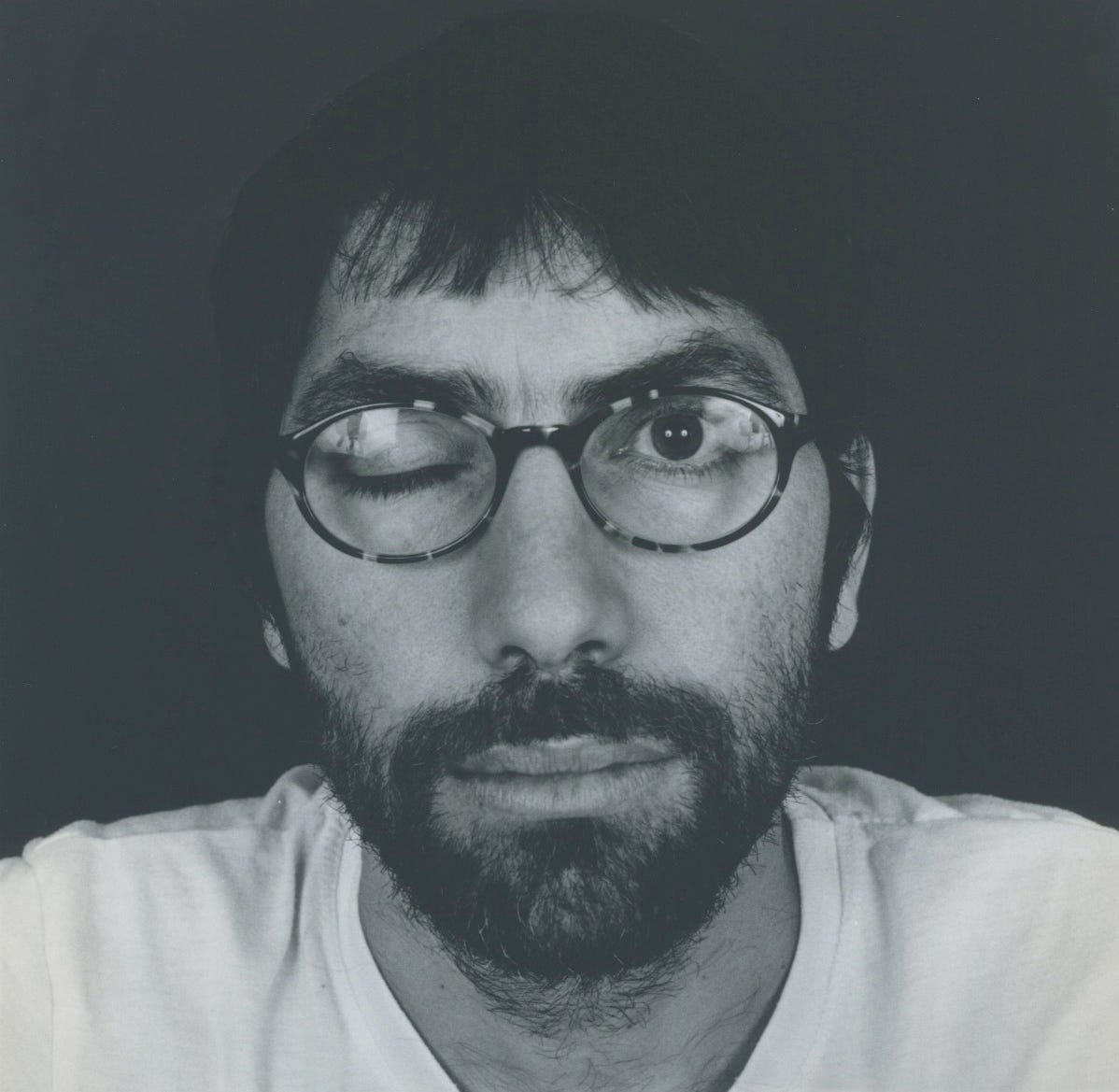
Perhaps the spareness of the production design was meant to position the audience in direct and pure confrontation with the structure of the performance, with all the elements in their purest form. Perhaps a fall doesn’t have to be violent or look like a collapse, but more like constant reworking of an existing structure, an artist chipping away until the original structure becomes less recognizable or unrecognizable. If that’s the case, perhaps The Fall of a Structure is the falling rather than the fall. The process rather than the result.
When you look at the Roy Assaf Dance website, Assaf himself seems to enjoy playing with words. He calls his team “Wizards”, for example. He can also seem nitpicky with words, as if to avoid being caged in by labels as a person and as an artist and to prevent his work from being confined to a genre. In a video on Gibney Company’s Instagram account for the world premier of his piece, A Couple, at the Joyce Theater in New York last May, he introduces himself as “a very simple homo sapiens”. He uses similar wording in his bio on the dance company’s website. In the video, he says that he “makes dances” and hates the word “choreographer”.
But The Fall of a Structure is not a dance either. As the program note suggests, perhaps we need to come up with a new word for this “theatrical event”. And like in The Fall of the Structure, there’s a certain cheekiness to Assaf when it comes to his use of language.
I watched The Fall of a Structure on the morning of December 4, 2025, at Dellal Hall in Tel Aviv, during the International Exposure 2025 dance festival. The interview with Assaf was conducted over emails, as he requested. He writes of working with young dancers, how words enter his creations, and a new home.
“The Fall of a Structure” is the first and only work of yours that I’ve seen. But I read that you’ve done a piece called “Girls” and another called “Boys” and have seen short clips of both shows. Why did you choose to work with only young female dancers in “The Fall of a Structure”?
Age doesn’t play a factor. Talent, passion, the ability to listen, to adapt, the strength to handle the unknown, and the human sensitivity required to engage with others—these are what truly matter. There was a big shift of dancers in my company a couple of months ago, and since I worked quite a lot in dance schools over the past year, I had the opportunity to work with many senior students. It felt natural to invite the ones I believed were the best fit for my work.
In your experience as a choreographer, do you find male dancers to be different from female dancers to work with? If so, what do you find to be the most interesting similarities and differences?
I always find it tricky to enter the maze of gender differences without reaching a dead end. I don’t see major differences that I can easily point out between working with dancers who appear male or female. In fact, I see more similarities, especially in the passion and curiosity people bring to the studio, and in their work ethic.
I found the words spoken in “The Fall of a Structure” so funny and charming and, at the end of the performance, so unexpectedly moving that I cried. Could you please talk about how you and the dancers developed the text for the piece?
First, it expands my heart to know that the piece moved you in a certain moment. Second, I didn’t arrive with written material or a clear intention to “add text”. But I love writing just as much as I love creating dance steps, so words always find their way into the studio. Sometimes they appear as a joke, sometimes as a way to survive a difficult rehearsal. Sometimes they slip out when a dancer tries to explain what they’re doing, or when someone shares something that happened to them the other day. In general, I see myself as an artist invested in creating an event onstage rather than defining the work as dance, theater, stand-up, musical, or circus. For me, there are no boundaries around what can be used or brought into the event. If words are needed, they enter.
Do you have Hebrew and English versions of the show? If so, what was it like to work with both languages for both you and the dancers? Did that yield slightly different results and tones?
We have both a Hebrew and an English version of the show. Translating text and moving between languages is always a kind of brain game. There are so many differences in sentence structure, word order, tenses, the gender of words, and sometimes a single word carries a cultural meaning that doesn’t exist in the other language. Most of the time, we had to choose: do we stick to a literal translation, or do we focus on keeping the feeling and experience of the word?
In the program notes for International Exposure, you wrote, “Perhaps we will always need to invent new words to describe the theatrical event.” What new things did you set out to explore in this piece?
The most honest answer is that I don’t know. I’m simply trying to bring together all the elements I have at my disposal—people, space, music, text into a structure that I find interesting.
You’ve written, “Every creation I embark on begins with fear.” Did you have a specific fear when you began working on “The Fall of a Structure”? If so, what was it and how did you work through that fear that arose during this particular creation?
The fear is always the same: the fear of leading poorly, the fear of disappointing those with whom I share the studio with, the fear of not being able to create a dance that truly interests me and that I enjoy watching.
I understand that you just built your own studio and now have a space of your own. What does it mean for you as an artist to have your own studio at this point in your career and in such an unstable time?
To have a permanent space for my company was a dream I carried for a long time. Even now, after nearly a year of working in our own studio, it still feels somewhat hard to believe. In the simplest terms, there is a beautiful comfort in being able to forget your water bottle or leave your shirt behind, knowing that you will find them there tomorrow. We no longer have to check a shifting schedule every morning just to figure out which rented room in the city we are supposed to show up to. Beyond that, the space gives us another creative medium, a place where we can share with other artists and initiate different events and activities for the dance community.
And yet, this space doesn’t exist in a vacuum. Outside, our uncertain reality knocks on the doors of our nerves almost every day, both economically and mentally. But we get to do what we love in a space we can call home. That is a lot, and it is something that should never be taken for granted.